September 30, 2026 in Blend momentum
Autopilot Update: Navigator Is Now Generally Available

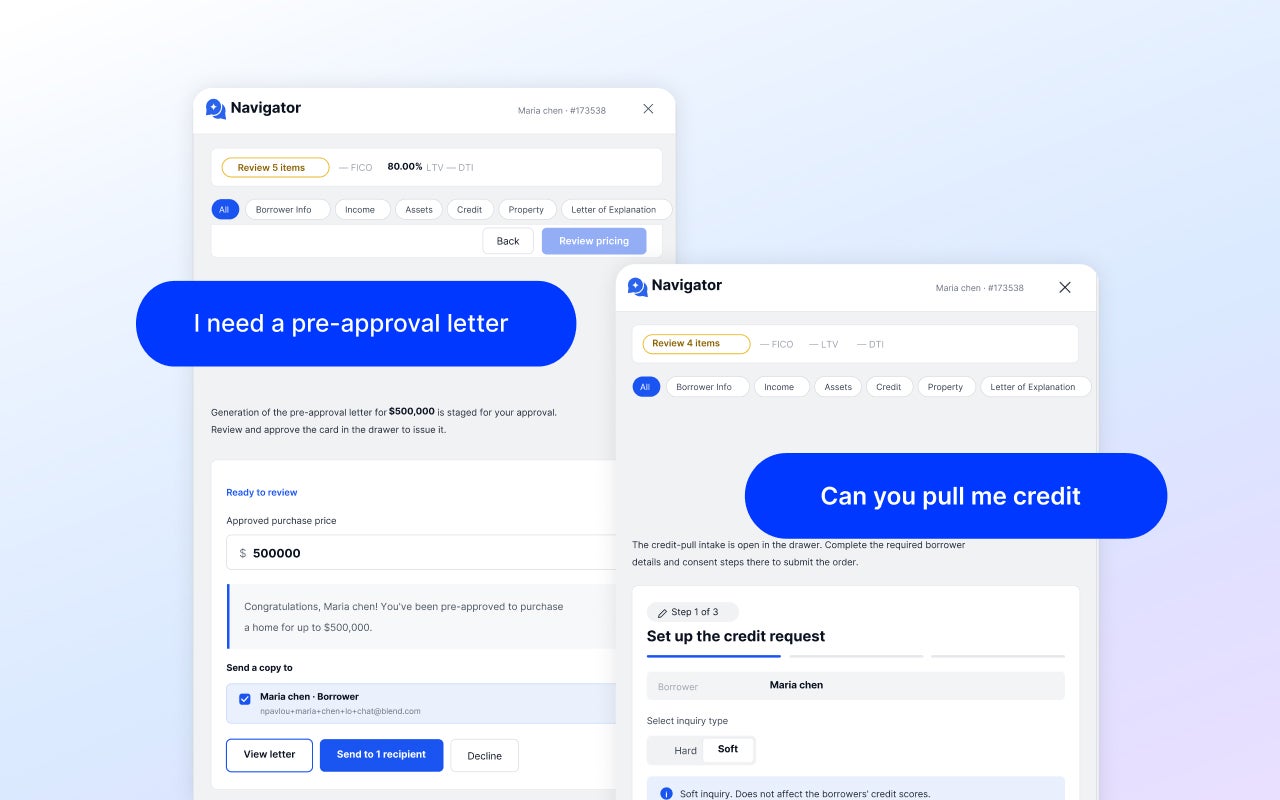
Three weeks ago, Navigator went into beta: a conversation with Autopilot inside the loan file, where a loan officer can ask about a loan, direct work on it, and approve any change before it is written.
Pricing a loan, selecting a product, pulling credit, submitting to AUS, updating fields, sending a borrower request, and generating a preapproval letter have all been live since beta, and lender teams have been using them on real files.
Today Navigator is generally available. What has changed is less about new surface area than about what happens between asking for something and it being done. That is what lender teams told us mattered most.
Approvals are bound to what you reviewed
Beta established the approval card as the control point: reads immediate, changes gated. This release makes that guarantee hold all the way through.
Every approval is tied to the exact values Navigator showed you. If something on the loan changes after a card is created, Navigator holds the action and surfaces the conflict instead of executing against information you did not review. Approve an action on one device and it resolves everywhere.
Approval cards are also more explicit about the change itself:
- A salary update shows the frequency, new value, and previous value
- A metadata update shows the proposed key and value
- A reassignment names the person receiving the loan
- A borrower request identifies exactly who will receive it
- A preapproval letter is validated against the loan when it executes, so the amount reflects what the file supports
Every approval waiting on you, in one place
Pending approvals now live in a single list. When Navigator stages multiple actions, each keeps its own status, so you can see what was approved, what completed, and what still needs attention. Work in progress is visually distinct from work that has finished, so a glance tells you where things stand.
Navigator checks an action is possible before it starts
New in this release is a working model of the loan’s current state: what has been verified, what has already happened, what is still open, and which actions are available next.
Navigator uses that to confirm an action can actually be completed before asking you for information or approval. Submissions go only where the loan is eligible. System-controlled fields stay under system control. And when something cannot be completed, Navigator tells you specifically why.
The result is less trial and error between asking Navigator to do something and getting it done.
Pricing runs from request through selection
Pricing was the headline of the beta release. This release takes it end to end.
Navigator prices any supported loan term and returns only products the lender’s pricing engine supports. Credit report data is available before score selection, and amortization follows the rate type you choose. When more information is required, Navigator identifies all missing inputs at once and names the check that applies, so you can resolve the request in one pass.
Pricing context also carries through the workflow. Product selections, preferred rates, lock outcomes, and approved terms remain intact as you move from one step to the next.
Navigator reads loan data more precisely
Income figures are more precise, including how totals are aggregated and how rental income is handled alongside other sources. Navigator can infer pay frequency from the document when it is not explicitly stated, and recognizes redacted fields as protected rather than empty.
DTI, FICO, and LTV now appear in the loan header. Search stays scoped to the loan officer’s assigned pipeline, and permissions around sensitive actions are tighter. After Navigator updates a loan, borrower follow-ups refresh automatically so the task list reflects the latest state of the file.
Navigator is faster
A newer model, fewer round trips behind each write, and a lighter footprint while loan officers work.
From asking to acting, with the loan officer in control
From beta to general availability, the change is in the distance between asking and done. Navigator reads the state of the file, identifies which actions are available, prepares the work, and shows exactly what will change before anything happens. Once approved, the action that executes is the action the loan officer reviewed.
Navigator still runs on the platform layer lenders can use to build their own agents and workflows on Blend, and it is still enabled through a capability toggle in Lending Config Center, with no separate deployment, integration project, or installation for loan officers.
The loan officer stays in control throughout.We publish a new update every two weeks. Subscribe to Autopilot updates to stay current with everything we’re shipping.
For more on what is shipping across Autopilot and Navigator, visit our changelog. It is updated weekly with everything new and improved across Autopilot.
Find out what we're up to!
Subscribe to get Blend news, customer stories, events, and industry insights.
Autopilot Update: Navigator is in Beta, and It Can Price a Loan
A loan officer can now ask Navigator to price a loan, see which products it is eligible for, and select one.
Read the article about Autopilot Update: Navigator is in Beta, and It Can Price a Loan
Intelligence Spotlight: Do more applications close with Autopilot?
For every 100 loans that closed before, lenders running Autopilot close 110-115. Same lenders, same applications, more fundings.
Read the article about Intelligence Spotlight: Do more applications close with Autopilot?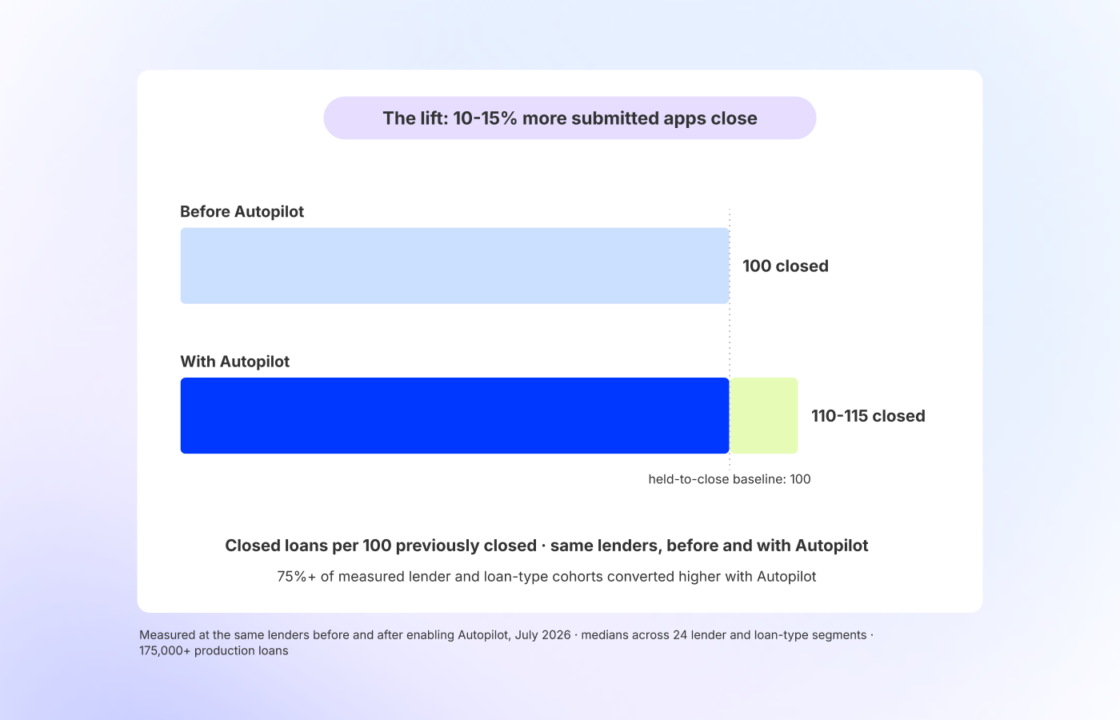
Autopilot Update: The Early Results Are In. Now We’re Making Them Repeatable.
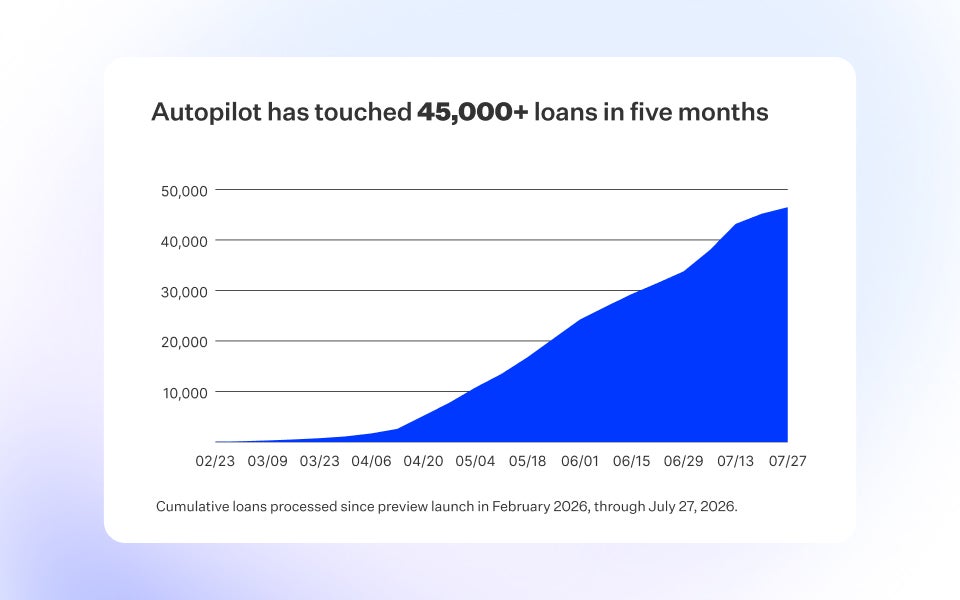
45,000 loans in. See what it took to make Autopilot's early production numbers hold up.
Read the article about Autopilot Update: The Early Results Are In. Now We’re Making Them Repeatable.