October 19, 2026 in Thought leadership
Winning the Account Isn’t the Same as Winning the Customer
The shift banks and credit unions are making to keep accounts active.

Leading banks and credit unions are redefining activation as a managed relationship instead of a one-time metric, and rethinking where AI belongs in that relationship.

Opening an account has never been faster, but that speed hasn’t made keeping the account active any easier. If anything, frictionless origination made the problem worse: the same ease that gets someone in the door makes it just as easy for them to leave.
Which raises an uncomfortable question. What exactly did you win? An account number, or a customer?
Most institutions would struggle to answer, because the numbers they watch can’t tell the difference.
Why loyalty is harder to hold onto than it used to be
Three things are hitting at once.
First, younger account holders feel little loyalty to any one institution; some now run automated tools that hunt down signup bonuses, park money for the minimum required period, and move on.
Second, digital origination erased the hassle that used to keep people from switching.
Third, the channels institutions lean on to win people back, email above all, are so saturated they’ve become background noise. The welcome sequence is landing in the same inbox that’s already full of them.
Put together, the customer has less reason to stay, less effort required to leave, and less chance of ever hearing your argument for staying.
That’s the shift underneath all of it. Activation is a front-line problem now.
The metrics measure the promo, not the relationship
Here’s the part most dashboards hide. The standard activation metrics, a debit card activation or 10 to 15 transactions a month, are usually the exact hurdles a signup bonus asks people to clear. So the numbers show who cleared the promotion’s hurdles, not whether they ever became a longer-term customer.
A member who makes 10 debit swipes, collects the bonus, and never returns looks identical on the report to a member who moved their financial life to you. One of them is a relationship. The other is a rebate.
If your activation rate tracks your promo calendar instead of your member base, you’re measuring the wrong thing.
Treat activation as a process, not a one-time event
Some institutions still treat activation as a gate. Miss the window, and the account gets flagged, deprioritized, sometimes closed outright.
Some institutions still treat activation as a gate. Miss the window, and the account gets closed. One credit union digital banking leader described a previous institution that started shutting down accounts after 60 days of inactivity and called that approach a bit aggressive, because life happens.
Account opening starts the relationship. What determines whether it lasts is what the institution does in the months after opening it.
What a staged touchpoint model looks like in the first 60 days
The institutions getting this right replace the single onboarding event with a cadence they can manage: touchpoints at 7, 14, 30, and 60 days. A few things distinguish the cadences that work.
- Outreach starts early. Waiting until day 60 to check in means the member decided weeks ago.
- Channels shift toward push notifications, because email is saturated, with frequency rules that still let critical alerts override.
- Each touchpoint asks for one thing. Set up direct deposit. Add the card to a wallet. Turn on alerts. Not all three.
The retention levers hiding in plain sight
Some of the strongest levers already exist. They just haven’t been treated as retention moments yet.
Direct deposit is a stickiness lever almost by accident: once it’s set up, moving it again is painful enough that most members never do.
Renewal offers can do the same work at the point of maturity, one institution countered a maturing CD with a non-advertised, higher-rate renewal offer instead of letting the funds transfer out, and kept the relationship.
And activation completed at the branch desk, before the member walks away, beats hoping a later digital nudge lands.
The same trust gap is showing up on both ends of the relationship
There’s one more force underneath all of this, and it’s the most revealing.
Members are wary of AI when their own bank offers it, but they’re already pasting their bank statements into general-purpose AI tools for financial plans.
An institution’s caution about consumer-facing AI and a member’s promo-gaming behavior driven by automated tools are two symptoms of the same unresolved question: who do members trust to act on their financial data?
Institutions are answering that, for now, by putting AI to work on back-office efficiency and behavioral triggers first, building a track record before asking members to trust it directly.
What happens on day 61 matters more than account opening
Account opening is a solved problem. Nearly every institution can do it in minutes, which is exactly why it no longer differentiates anyone.
The real challenge is whether you have a plan for what happens in the 60 days after.

Curious how Blend can help your institution think past account opening?
Find out what we're up to!
Subscribe to get Blend news, customer stories, events, and industry insights.
Autopilot Update: Navigator Shows Its Work
The document, the disclosure status, the next step. All in the conversation.
Read the article about Autopilot Update: Navigator Shows Its Work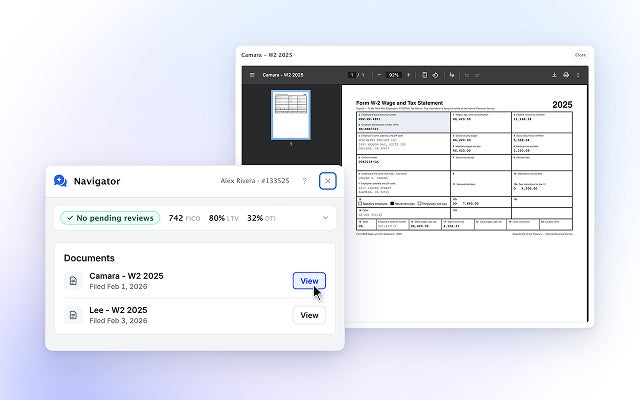
A First Look at Navigator Mobile: An LOA in Your Pocket
It’s an AI agent that works the loan with you, not a chatbot that answers questions. It reads your pipeline, surfaces what needs your attention, keeps you updated as loans…
Read the article about A First Look at Navigator Mobile: An LOA in Your Pocket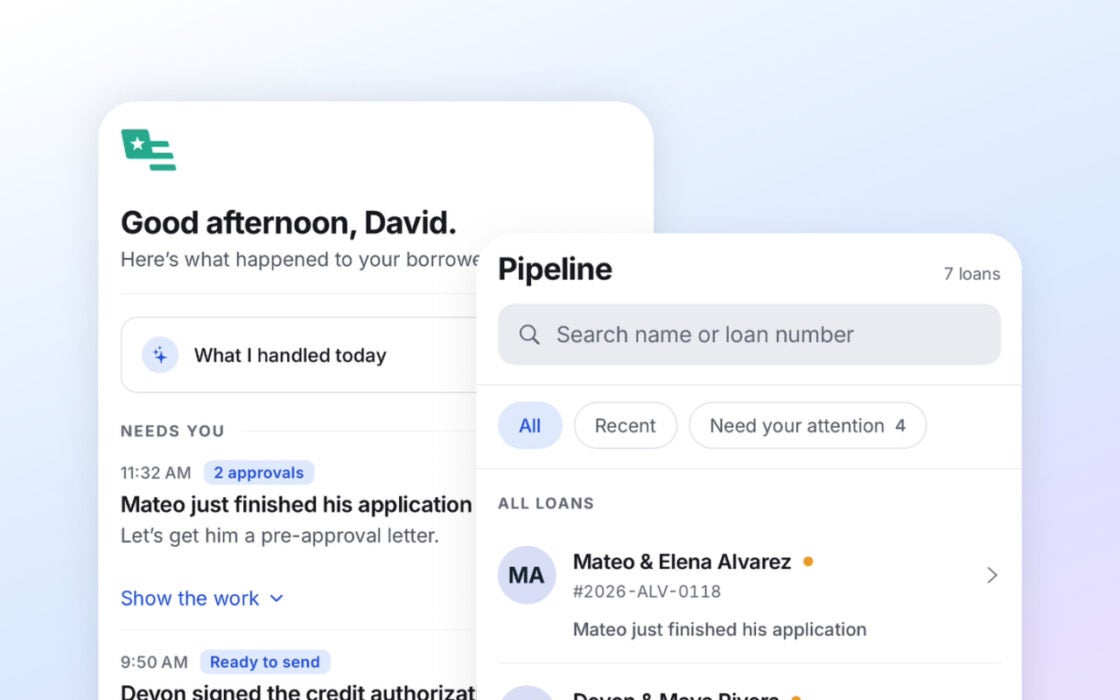
Autopilot Update: Getting the Details Right
This cycle, we tightened that behavior across document review, borrower follow-ups, pricing, AUS, and security.
Read the article about Autopilot Update: Getting the Details Right