May 18, 2026 in Thought leadership
Inside the Credit Union Conversations Shaping 2026
An inside look at what credit union leaders are prioritizing, where they see opportunity, and what they believe needs to change

Credit unions have always had a relationship advantage. Members do not join a credit union because they want to be treated like an account number. They join because they expect something more personal: better service, more trust, and a financial institution that understands their needs.
But that advantage is being tested. Fraud is getting harder to detect. Fintechs are capturing a larger share of new account openings. And in home lending, many credit unions are losing mortgage opportunities from members who already bank with them.
That was the focus of Blend’s 2026 Credit Union Roundtable, where senior technology and lending leaders from 11 credit unions came together in Chicago to discuss the biggest challenges and opportunities shaping the year ahead. The result is a new insights report that captures 10 of the most important takeaways from those conversations: what credit union leaders are prioritizing, where they see opportunity, and what they believe needs to change.

Three themes from the credit union roundtable
1. PFI status grows when member experience leads
Credit unions have always had a structural advantage over fintechs and banks: the relationships. Members join expecting to be treated like people, not accounts. But that advantage only compounds if you actually build on it.
Participants identified PFI status as a more durable performance indicator than raw membership growth, and the path there runs through better experiences, not more paperwork. The proxies that matter most are direct deposit enrollment, bill pay usage, and active services per household. By those measures, there is significant room to grow. At many institutions, only about 37% of members have direct deposit set up, one of the clearest signals of whether someone has genuinely made the credit union their financial home. Capturing that enrollment at the application stage is one of the most direct ways to convert a new account into an engaged member from day one.
The deeper issue is where staff time is actually going. When loan officers are buried in manual document collection, follow-ups, and verification steps, the relationship-building that differentiates a credit union from a bank simply doesn’t happen. Routine work fills the time that should go to members.
Insight: The credit union’s advantage is the relationship. Protecting it means removing the friction that gets in the way of it. When routine origination steps are automated, loan officers get time back for the conversations that actually build loyalty and deepen relationships.
2. Rising fraud calls for selective friction
According to Alloy, the leading identity and fraud prevention platform, 72% of credit unions reported an increase in fraud events in 2025. Synthetic identity fraud, account takeover, and authorized push payment fraud are among the most prevalent types. Fraudsters are increasingly using AI-generated document forgeries and social engineering tactics that are difficult for human reviewers to catch.
This creates a practical tension for credit unions. Adding more verification steps reduces fraud exposure but also slows down the onboarding experience and increases drop-off. Removing friction improves completion rates but opens the door to more fraud.
Insight: The approach that has shown the strongest results is leading with non-documentary identity verification by default, and only stepping up to documentary checks when a specific risk signal is triggered. This keeps the experience fast for the majority of legitimate applicants while applying additional scrutiny where it is actually needed.
3. Untapped lending potential starts with existing members
Home lending penetration among existing members is low across the industry. At many institutions, the vast majority of members do not hold a home loan with their credit union, despite already having an established relationship there.
A key contributing factor is that frontline staff often lack the product knowledge or confidence to initiate mortgage or home equity conversations with members at the point of service.
Many branch and call center employees are early in their careers, do not own homes themselves, and have not been equipped to start that conversation. The result is that a large share of home lending demand from existing members goes uncaptured, not because those members chose a competitor, but because no one at the credit union asked.
This is also where a consistent, unified member experience across product lines starts to pay off. When a member’s deposit relationship, consumer loan history, and mortgage application all live within a connected experience, frontline staff have the context they need to have a relevant conversation. And when the member moves from one product to another, they’re not starting over. The institution already knows them. That continuity is what turns a transactional relationship into a primary one, and it is something most fintechs are not positioned to replicate.
Insight: Investing in product education for frontline staff drives referral volume and application starts. But the institutions capturing the most from their existing membership are also the ones building connected experiences across product lines, making it easier for both staff and members to take the next step together.
What the full picture shows
Those were just three of the themes we covered in our credit union insights report. What came through across every conversation at the roundtable was a consistent thread: the credit union advantage is real, but it requires active effort to protect. The institutions making the most progress are not necessarily the largest ones. They are making deliberate decisions about technology, experience, and member engagement, and treating those decisions as connected rather than isolated.
The full report goes deeper on all of it.

Get all 10 takeaways from Blend’s 2026 Credit Union Roundtable, including insights on AI adoption, loan officer efficiency, and the future of member growth.
Find out what we're up to!
Subscribe to get Blend news, customer stories, events, and industry insights.
Autopilot Update: Why Income Accuracy Gets Better Every Week in Autopilot
Income improvements since launch, how long it took to go from lender feedback to live in Autopilot.
Read the article about Autopilot Update: Why Income Accuracy Gets Better Every Week in Autopilot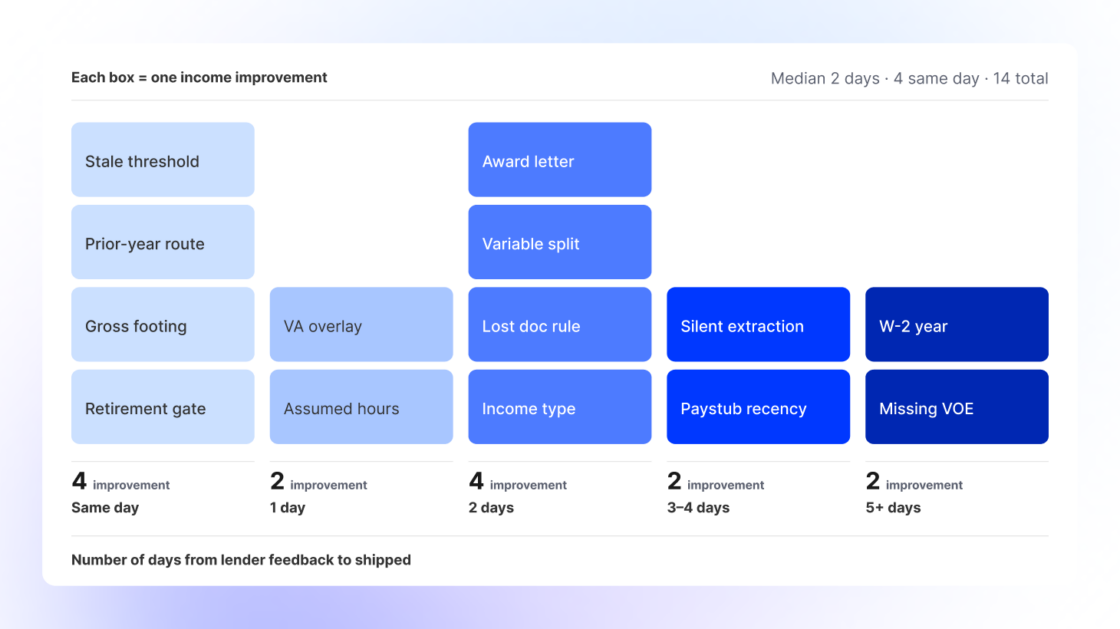
Autopilot Update: Navigator is in Beta, and It Can Price a Loan
A loan officer can now ask Navigator to price a loan, see which products it is eligible for, and select one.
Read the article about Autopilot Update: Navigator is in Beta, and It Can Price a Loan
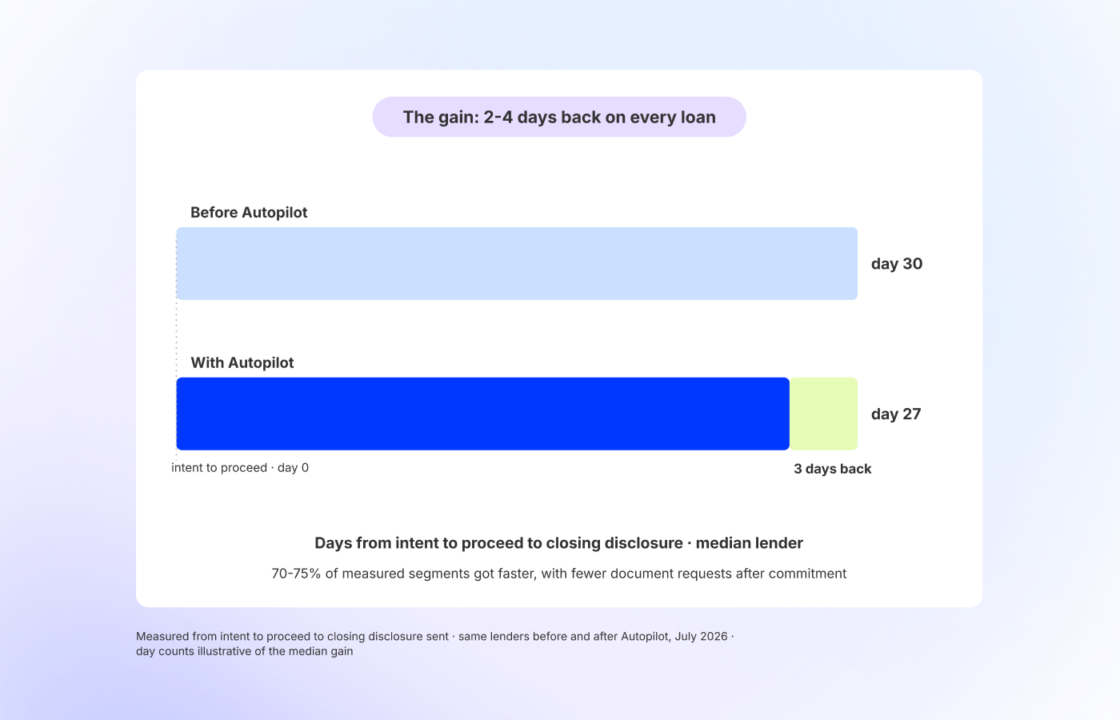
Intelligence Spotlight: How much faster does closing paperwork reach borrowers with Autopilot?
Closing disclosures go out 2-4 days sooner with Autopilot. The reason: files get fixed at intake, not after the borrower commits.
Read the article about Intelligence Spotlight: How much faster does closing paperwork reach borrowers with Autopilot?