December 23, 2025 in Mortgage Suite
Stop Asking LOs to Choose RON: 5 Tips to Make Adoption Stick
Lenders can help increase RON adoption by replacing manual closing coordination with standardized digital workflows and technical guardrails.

RON adoption isn’t failing because borrowers aren’t ready or the technology isn’t there. It’s failing because lenders are treating it like an option instead of an advantage.
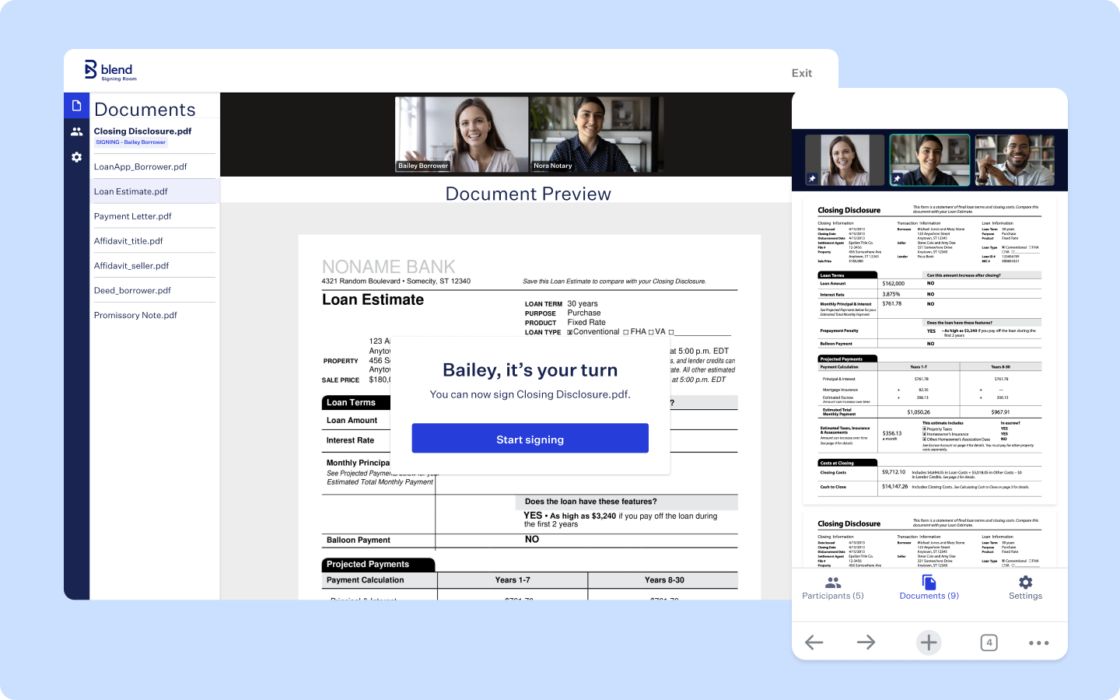
Remote Online Notarization (RON) offers the most seamless experience for consumers, it removes scheduling friction, speeds up the closing process, and delivers a fully digital finish. While keeping options available is important, leading institutions recognize that borrowers and loan officers often default to what’s familiar unless they’re guided toward what delivers better outcomes.
The lenders winning with RON aren’t waiting for demand to appear—they’re actively educating, setting expectations, and operationalizing RON as the default path to drive faster cycle times, lower costs, and loyalty-building borrower experiences.
Here are five strategies we learned from leaders at Blend’s Forum 2025 who are successfully scaling RON adoption across their organizations.
Set RON as the default and remove the choice
Stop asking loan officers if they want to use RON. The most successful lenders establish hybrid or RON as the standard operating procedure, with controlled exceptions only when investor or program requirements demand traditional closings.
“Don’t convince the LOs. Tell them, ‘This is what we do. It may fall off for X, Y, and Z, but this is what we do,’” explains one mortgage leader who scaled RON across their operation. Another took it further: “You cannot even choose anything else. Only a couple of closing managers can reverse it, and they need a very good excuse.”
This isn’t micromanagement.It’s eliminating the variability that derails adoption. When every loan officer makes individual decisions about closing methods, you get inconsistent borrower experiences, training challenges, and operational inefficiencies that undermine your investment.
The impact: Consistent implementation across all loan officers, predictable operational workflows, and borrower experiences that match your brand standards.
Front-load borrower preparation
Closing day chaos kills digital adoption. Smart lenders recognize that borrowers juggling kids, work, and moving logistics can’t handle learning new technology in real-time.
The solution: send hybrid e-sign packages several days before closing. “We send it out a few days early to give them a little extra time,” shares one operations leader. This simple change eliminates same-day pressure and reduces abandonment rates.
AI-powered communication takes this preparation further, enabling automated outreach that can remind borrowers about their closing packages or their closing windows without requiring manual intervention from loan officers who may not be available during evening or weekend hours when borrowers typically review closing documents.
The impact: Higher completion rates, fewer last-minute delays, and borrowers who arrive at closing prepared and confident.
Route questions to closing experts, not loan officers
Your loan officers shouldn’t be closing experts. The current system creates a telephone game: borrowers call LOs with closing questions, LOs call processors or closers for answers, then relay information back, sometimes incorrectly.
Successful lenders break this cycle by connecting borrowers directly to closing specialists who can provide immediate, accurate answers. One roundtable participant describes this direct connection as “a relief valve to get them directly to who they should be talking to and have those conversations up front.”
The closers appreciate this approach too: “They like it better than having to manage back-and-forth with a loan officer on every single file,” one leader mentioned. Direct communication eliminates miscommunication while focusing loan officers’ attention on relationship management and pipeline development.
The impact: Faster resolution of borrower questions, reduced stress on loan officers, and accurate information delivered by subject matter experts.
Equip loan officers with a simple, accurate playbook
Loan officers still need to handle basic questions. While direct closer access addresses complex issues, LOs require resources to manage routine inquiries without becoming closing specialists themselves.
“We give loan officers a simple guide that explains which documents are eligible for e-sign versus which still require wet signatures, so they can confidently explain the process with customers,” explains one lending leader. Simple reference guides let loan officers maintain their primary relationship role while handling first-level questions confidently.
The key: acknowledge that loan officers will continue fielding questions, but give them tools that prevent unnecessary escalations and maintain borrower confidence.
The impact: Reduced escalations to busy closers, maintained LO-borrower relationships, and consistent information delivery.
Control settlement agent behavior to protect your investment
Settlement agents will default to paper if you let them. Without proper controls, title companies print entire packages and revert to traditional processes, eliminating the efficiency gains you’ve invested in achieving.
To prevent this, leading lenders configure their systems so documents can be viewed for e-signing but not downloaded or printed. One implementation expert explains how this works in practice: “As a settlement agent, I can see the e-sign docs but cannot download and bring them to the table,” forcing title companies to maintain the hybrid process rather than reverting to paper.
Left to their own preferences, settlement agents will consistently choose familiar paper-based workflows that undermine your RON investment. This technical control prevents settlement agents from choosing convenience over your operational strategy.
The impact: Preserved efficiency gains, consistent hybrid execution, and protection of your technology investment.
Leadership creates adoption, not technology
RON adoption is a leadership decision, not a technology challenge. The lenders succeeding at scale aren’t debating borrower readiness or waiting for perfect solutions. hey’re making operational decisions that position their institutions for competitive advantage.
In a market where $650 per loan savings and 9-day faster cycle times create measurable bottom-line impact, RON is now driving operational infrastructure. The institutions building this capability now are creating sustainable advantages in efficiency, cost structure, and borrower experience.
The question isn’t whether your market is ready for RON. It’s whether your leadership is ready to make the decisions that capture the competitive advantages already available to those willing to act.

Find out what we're up to!
Subscribe to get Blend news, customer stories, events, and industry insights.
Blend Autopilot Week 5 Update: Autopilot MCP Server Ships, Opening the Full Lending Platform to AI Agents
One connection. Full platform access. Here's what Autopilot MCP means for your institution.
Read the article about Blend Autopilot Week 5 Update: Autopilot MCP Server Ships, Opening the Full Lending Platform to AI Agents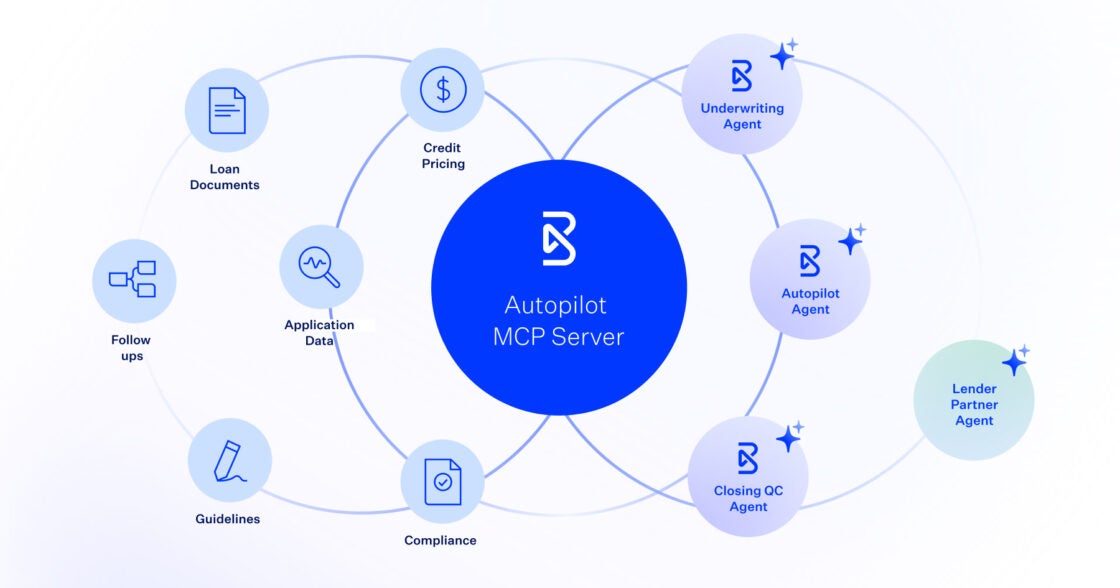
Next-Level Growth: Closing the Execution Gap in 2026
Join Blend, Cornerstone Advisors and, People First FCU, as they operationalize the findings of the Next-Level Growth: Credit Union Opportunities in a Changing Market report.
Watch video about Next-Level Growth: Closing the Execution Gap in 2026
Blend Autopilot Week 4 Update: Borrower Chat Is Coming, API-Uploaded Documents Now Visible to Autopilot, and Smarter Cross-Document Analysis
Real adoption, real feedback. See how lenders are shaping what Autopilot has become this week.
Read the article about Blend Autopilot Week 4 Update: Borrower Chat Is Coming, API-Uploaded Documents Now Visible to Autopilot, and Smarter Cross-Document Analysis