April 1, 2026 in Blend momentum
Blend Autopilot Week 4 Update: Borrower Chat Is Coming, API-Uploaded Documents Now Visible to Autopilot, and Smarter Cross-Document Analysis
Autopilot Weekly Update: Week 4

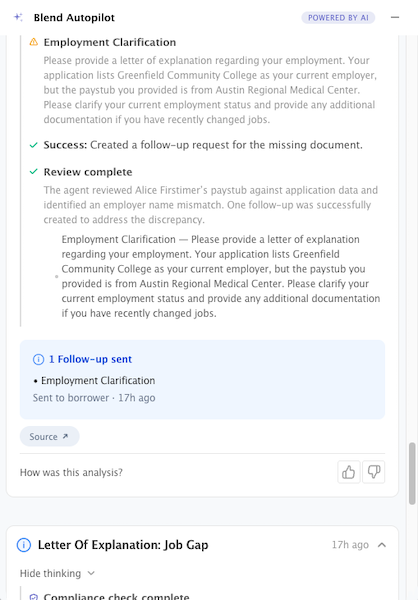
Four weeks in, and lender interest is translating into real adoption. This week, the team began implementing borrower chat, the next major capability we previewed last week. We also expanded what Autopilot can see: documents uploaded via API are now part of the agent’s context. Here’s what’s new.
50 lenders have activated Autopilot
Adoption is accelerating. Fifty lenders have now activated Autopilot, with 15 running it in their live production environments. Virtually all are self-serving directly through Lending Config Center without an onboarding call, exactly how we designed this to work.
What’s been equally valuable is the feedback. Lenders testing and using Autopilot on real loans are telling us what works, what’s missing, and what they need next. That feedback is shaping the product in real time. Several of the improvements in this update, from how the agent handles documents to what it can access, came directly from lender conversations at ICE Experience and in the weeks since.
This is what building in preview looks like: ship fast, listen closely, and improve every week.
Subscribe to Autopilot updates
Borrower chat will let borrowers ask Autopilot questions
Today, Autopilot communicates with borrowers through follow-ups that send structured requests for documents, explanations, and next steps. That experience is about to get a lot richer.
The team is implementing borrower chat, a conversational interface where borrowers can ask Autopilot questions about their loan in plain language. What documents are still needed? Why was this follow-up created? What happens next? Instead of scanning a task list, the borrower has a conversation.
A few details on what’s taking shape:
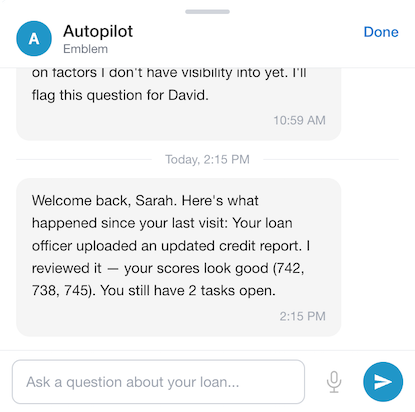
Compliance-first design. The agent knows what it can and can’t say. Guardrails aren’t being added after the fact. They’re built into the foundation. Every response is grounded in the borrower’s actual loan data, not generic guidance.
Welcome-back summaries. When a borrower returns to their loan after time away, the agent catches them up on what’s been processed, what’s changed, and what’s still outstanding. No scrolling through a timeline trying to piece together what happened.
Ready for real volume. Message storage, rate limiting, and real-time delivery are all in place. This isn’t a demo. It’s designed to handle the scale of real lending operations from day one.
The core is built. We’ll share more as borrower chat gets closer to launch.
Autopilot now sees documents uploaded via API
Many lenders use Blend’s APIs to push documents from their LOS, such as appraisals, title reports, closing packages, and other documents that originate outside the borrower workflow. Previously, Autopilot only had visibility into documents uploaded directly by borrowers. Those API-uploaded documents sat in the loan file but weren’t part of the agent’s context.
That’s changed. Autopilot now has access to documents uploaded via API. When a processor sends over a batch of documents from their LOS, those documents are now visible to the agent, the same way borrower-uploaded documents are. Autopilot can review them, check compliance, and factor them into its analysis of the loan.
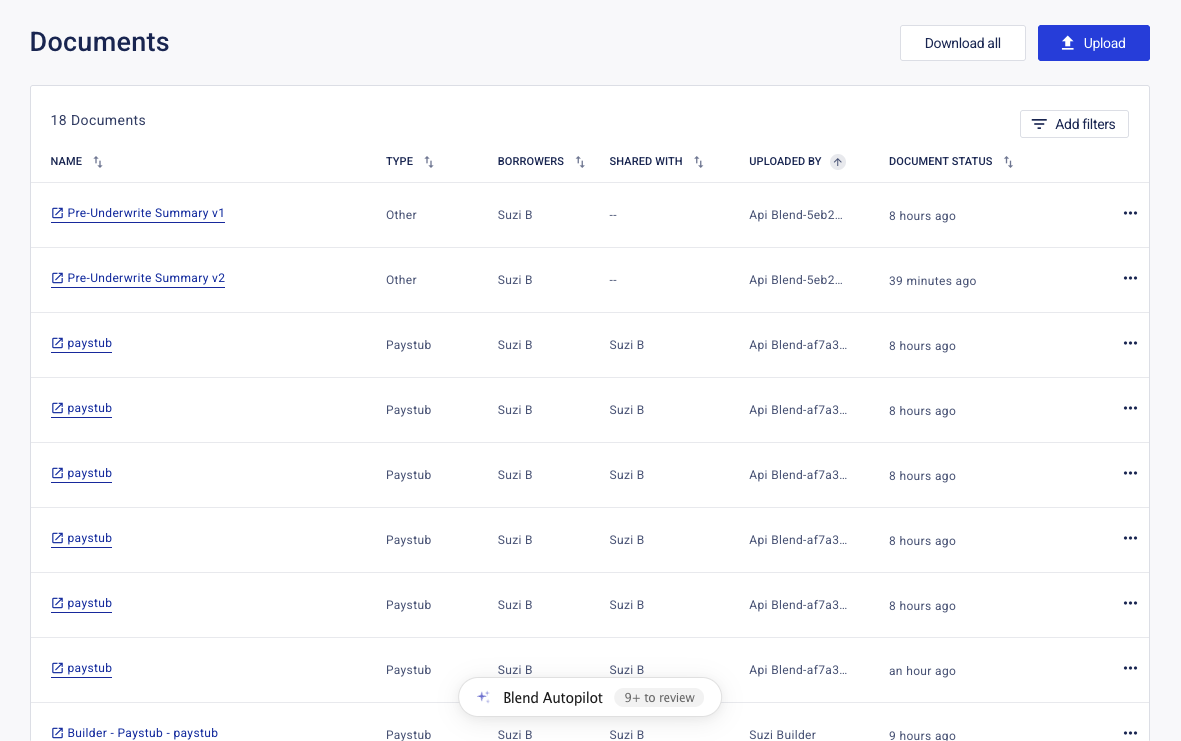
This matters for lenders running integrations where documents flow from both directions, with borrowers uploading directly in Blend and processors or underwriters pushing documents from the LOS. Autopilot now has the full picture, regardless of how the document got there.
No configuration change needed. If you have Autopilot activated and you’re pushing documents via API, the agent can already see them.
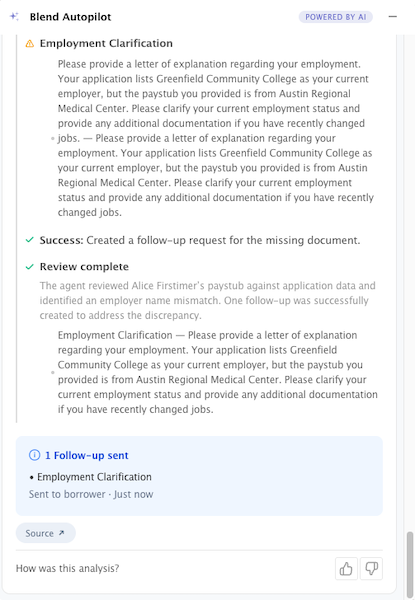
The agent now reasons across documents
When a borrower uploads multiple documents on a loan, Autopilot no longer evaluates each one in isolation. The agent now cross-references findings across documents, catching inconsistencies and connections that only surface when you look at the full picture.
A W-2 that shows one employer while a paystub references another. A bank statement deposit that aligns with a Schedule C revenue figure. An address on a tax return that doesn’t match the application. These are the kinds of cross-document issues that experienced underwriters catch, and that Autopilot now flags automatically.
This builds on the session-level awareness we introduced in Week 2. The agent already maintained context across a borrower’s session. Now it actively reasons across documents to surface findings that no single document would reveal on its own.
Document review is more accurate
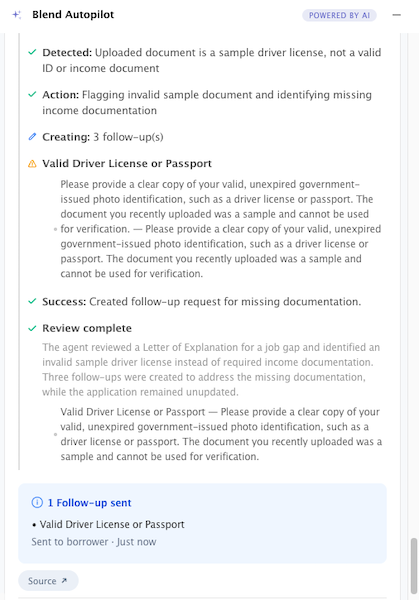
We shipped two quality improvements this week that directly affect how Autopilot handles document review.
First, when a borrower uploads the wrong document (a bank statement instead of a paystub, or an incomplete file that doesn’t match the request), Autopilot now correctly flags it as a compliance issue. Previously, certain wrong-document scenarios could slip through without a finding. That’s fixed.
Second, the agent is meaningfully faster. We resolved an issue that could cause processing times to stretch to several minutes on certain document types. Processing is back to the speeds lenders and borrowers expect: seconds, not minutes.
More control, better quality, stronger infrastructure under the hood
Beyond the headline features, the team shipped a series of quality, reliability, and infrastructure improvements this week:
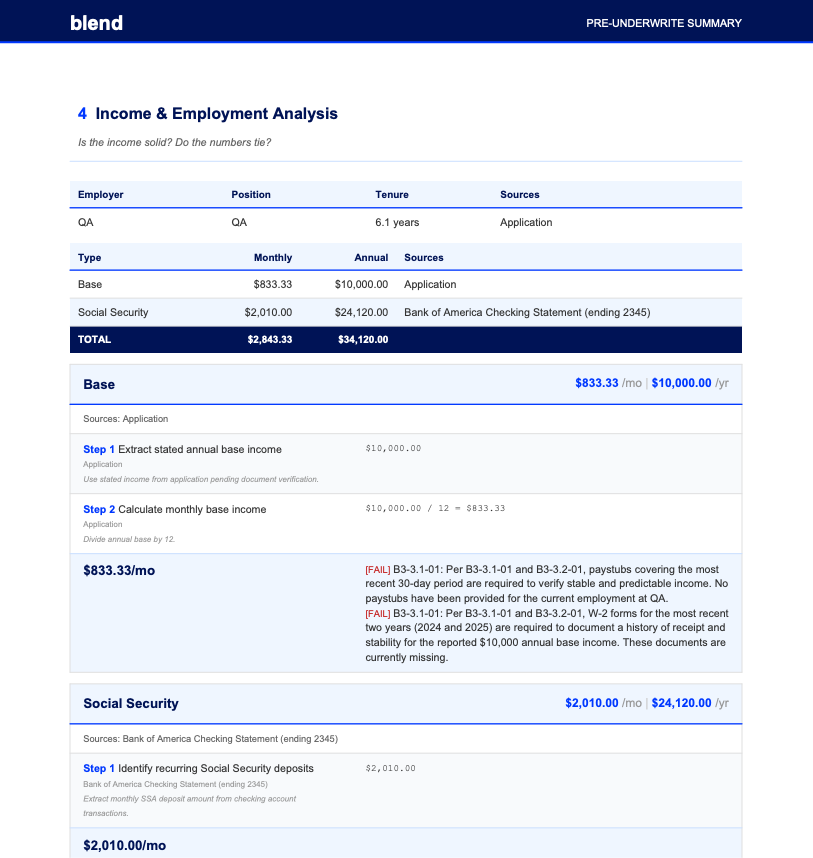
- Pre-underwriting summary enhancements: The summary PDF now pulls in full application data, giving underwriters richer context alongside document findings. Source tracking in generated PDFs also improved for better auditability.
- Smarter information delivery: The agent now surfaces information progressively, leading with what matters most rather than front-loading every detail. Interactions are cleaner and more focused.
- Expanded quality coverage: New automated evaluation scenarios covering paystub verification and end-to-end borrower profile testing. These run continuously to catch quality issues before they reach production.
- Infrastructure and reliability: Controlled rollout pipeline for new capabilities, automated dependency management, and increased service redundancy across environments.
Where Autopilot is going next
Borrower chat is the immediate priority. The core is built and the team is continuing to build toward full implementation. We’ll have more to share soon as it gets closer to launch.
Next up is loan officer chat. We’re designing a desktop and mobile widget where loan officers interact with Autopilot directly from their loan workflow. Ask the agent about a loan, get answers, all without leaving the screen you’re already on. The data infrastructure to power it shipped this week.
We’re also continuing to expand what Autopilot understands. Credit analysis, pricing, fees, and DU results are on the roadmap, giving the agent a fuller picture of each loan alongside the documents it’s already reviewing.
Every improvement ships automatically to every lender with Autopilot activated. No upgrade cycles. No implementation projects. The agent gets better every week.
We’ll be back next Wednesday with what’s new.
Blend Autopilot is currently in preview and free to activate and use during the preview period for all Blend customers. To get started, visit your Lending Config Center or contact your Blend account team.
We publish a new update every Wednesday. Subscribe to the Autopilot weekly update to make sure you stay up to date with everything we are shipping.
Find out what we're up to!
Subscribe to get Blend news, customer stories, events, and industry insights.
Reduce Pre‑Closing Delays with Refreshable Asset‑Based Employment Checks
Learn how refreshable, asset‑based employment checks can reduce pre‑closing delays, cut last‑minute outreach, and align with DU®, LPA®, and agency expectations.
Read the article about Reduce Pre‑Closing Delays with Refreshable Asset‑Based Employment Checks
Blend Autopilot Week 3 Update: Nima Ghamsari on Why Blend Built Autopilot, the Pre-Underwriting Summary Ships to Production, and Smarter Document Validation
AI that handles edge cases automatically. See what shipped in Autopilot's third week of production.
Read the article about Blend Autopilot Week 3 Update: Nima Ghamsari on Why Blend Built Autopilot, the Pre-Underwriting Summary Ships to Production, and Smarter Document Validation
Blend Autopilot Week 2 Update: A Smarter Agent, Gift Fund Detection, and Transparent Income Calculations
This week’s Autopilot update brings a faster agent, gift fund detection, step-by-step income breakdowns, and native routing.
Read the article about Blend Autopilot Week 2 Update: A Smarter Agent, Gift Fund Detection, and Transparent Income Calculations